Extensometers for Mechanical Testing to Measure Elongation
Strain Measurement for Materials Testing.
Over thirty years of experience have been invested in the development of our products. At our facilities in Jackson, Wyoming, we design and manufacture extensometers for testing applications worldwide.
.
Extensometers are available for testing nearly all engineering materials, including elastomers, plastics, composites, metals, ceramics, geomaterials (such as rock, concrete, and asphalt), and biomaterials like bone.
.
Models are available for small and delicate specimens—including relatively fine wire—up to large metal samples and substantial rock cores.
The wide range of models covers nearly every type of test, including: tensile, compression, bending, fracture mechanics, and strain-controlled cyclic testing such as low-cycle fatigue.
.
Many of the extensometers are also capable of operating at relatively high frequencies..
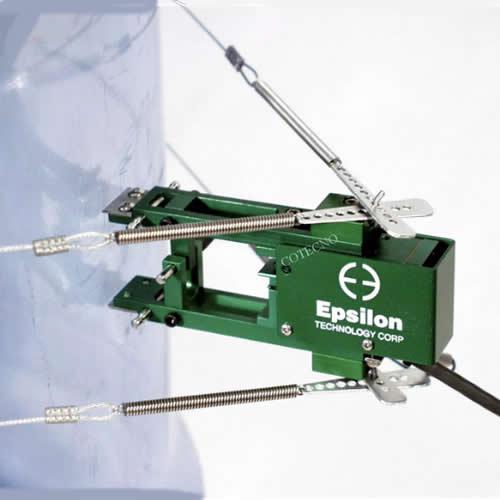
General-purpose extensometers for axial tensile, compression, and cyclic testing. Gauge lengths range from 0.5 to 2 inches (10 to 80 mm), with measurement ranges from 5% to 100% strain.
These extensometers are designed to test a wide variety of materials, including metals, plastics, composites, and ceramics.
The dual-flexure design makes them highly durable and insensitive to vibrations, allowing for higher operating frequencies.
The quick-attach kit can be removed, enabling the extensometer to be mounted using springs or elastic bands. Model 3542 extensometers are strain-gated devices, which...
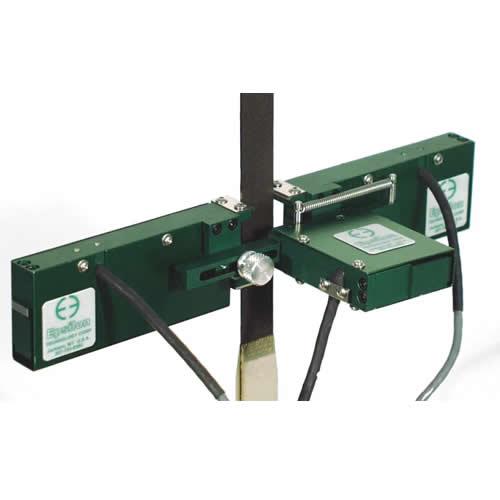
A single integrated unit provides simultaneous lateral (transverse) strain measurement and averaged axial strain measurement. The unit is also available as an averaged axial-only extensometer.
This extensometer is ideal for testing anisotropic materials such as advanced composites, as well as for general-purpose testing like determining Poisson’s ratio.
The 3560BIA model uses a unique Epsilon design, where the knife edges remain parallel during displacement...
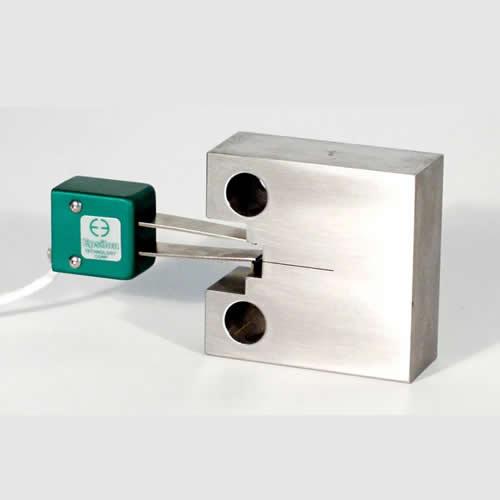
For fracture mechanics studies, these COD gauges comply with standardized testing methods such as ASTM E1820 for determining fracture toughness properties of metallic materials.
These gauges meet the requirements of E1820 (the replacement for E813 and E1737) for JIC and R-curve determination.
Special configurations are available to meet ASTM E399 requirements for fracture toughness...
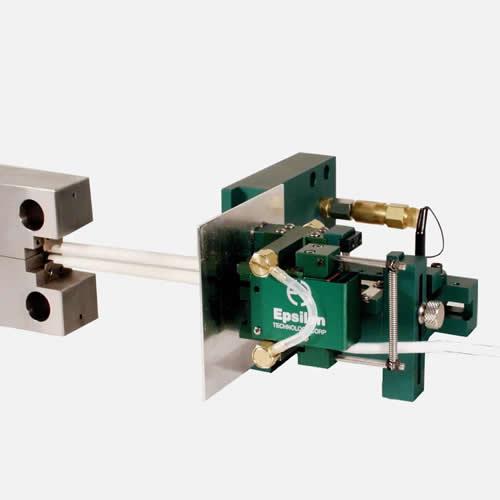
High-temperature COD gauge for use with specimens that include slots for ceramic rods.
Water-cooled and furnace-mounted, these units are designed for use up to 1200 °C (2200 °F)
The high-temperature option allows operation up to 1600 °C (2900 °F).
They are specifically designed for fracture mechanics testing.
These COD gauges are mounted on a water-cooled fixture, which is installed on a side-entry furnace, with an optional load cell integrated into the fixture...

 +52 33 3817 0140 | +52 33 3817 8122




 You can chat directly with us using our live chat feature.


