
 +52 33 3817 0140 | +52 33 3817 8122

Return to Universal Testing Machines ← Special Applications for Universal Testing Machines (PTS)←
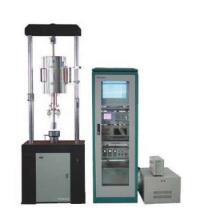
Creep and Burst Testing Machines
The electronic creep and stress rupture testing machine series is mainly used for creep tensile and compression tests, stress rupture tests, and testing of both metallic and non-metallic materials.
It can also perform standard tensile tests, as well as low-cycle fatigue tests and creep-fatigue tests with the appropriate accessories.
Features:
-
- Utilizes an electromechanical servo system with a screw-driven transmission, replacing the traditional lever-loading mechanism. The system can automatically switch between constant load and constant stress control modes.
- Electronic load measurement system for load and strain, with digital display.
- Computer software is used for data acquisition, processing, and analysis.
- Models are available in single-column or multi-column configurations, depending on testing capacity.
- Environmental chambers, grips, and extensometers are available to meet various material testing requirements.
.
Main Specifications:
-
- Maximum load capacity: 10 kN, 20 kN, 50 kN, 100 kN, 200 kN, 500 kN
- Load measurement accuracy: ±1%
- Strain measurement: via LVDT or extensometer, selectable ranges of ±1, ±3, ±5, ±10 mm
- Strain measurement accuracy: ±0.5% F.S.
- Long-term constant load/strain control accuracy: ±1%
- Crosshead speed range: 0.01 – 50 mm/min
- Temperature options:
- Split furnace: 300 – 1000 °C
- Environmental chamber: -70 – +350 °C
- High-temperature vacuum furnace: 800 – 1600 °C
- Temperature fluctuation: less than ±2 °C
 (Agrandar)


 You can chat directly with us using our live chat feature.


