
 +52 33 3817 0140 | +52 33 3817 8122

Return to Special Instruments← Torsion Testing Machines←
NJS Series - Machine for Torsion and
Plasticity Testing of Metallic Materials
Equipment for Evaluating Ductility, Torque, and Torsional Resistance in Wires, Rods, and Metallic Materials
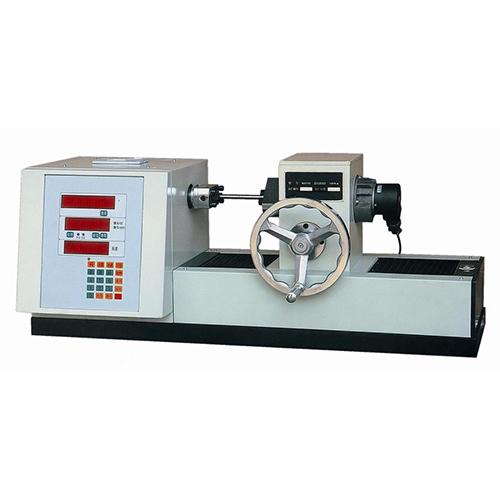 ⭐ What is the NJS Series?
The NJS Series is a torsion testing machine designed to measure the plasticity, mechanical strength, ductility, and torsional behavior of wires, rods, and other metallic materials. Its design allows both automatic and manual testing, providing excellent versatility for industrial quality control applications as well as scientific research.
It is widely used in laboratories, universities, metalworking industries, steel wire manufacturers, and certification centers that require precise torque and angle-of-twist data in compliance with international standards.
🔍 What Does This Equipment Do?
- Applies controlled torsional loads to evaluate plasticity, ductility, torque resistance, and behavior up to fracture.
- Automatically records the initial torque (M1) and maximum torque (M2).
- Performs automatic or manual tests with selectable torque and angle measurement points.
- Identifies surface defects in wires and rods during torsion testing.
- Allows retrieval and printing of test results after completion.
🛠 Testing Modes
1️⃣ Automatic Test
The operator turns the handwheel until the specimen fractures.
The machine automatically records:
- M1: Initial torque
- M2: Maximum torque reached
Results can be displayed or printed after the test.
2️⃣ Manual Test
Allows the selection of any angle or torque level at up to 9 measurement points during the test.
Ideal for research applications requiring a detailed torsion curve analysis.
⚙️ Main Technical Specifications
- Maximum torque: 150 Nm
- Minimum torque resolution: 0.05 Nm
- Accurate measurement range: 20–150 Nm
- Maximum torsion angle: 9999.9°
- Minimum angle resolution: 0.1°
- Relative torque error: ≤ ±1.0%
- Torque repeatability: ≤ 1.0%
- Maximum specimen diameter: 10 mm
- Maximum testing space: 260 mm
- Power supply: AC 220V ±10%
📏 Applicable Standards
Complies with international standards for torsion testing, including:
- ASTM A938
- ISO 7800:2003
- GB/T239-1998
- GB 10128
- Equivalent international standards
🧪 Applications
- Metallic wires
- Steel rods
- Drawn wire products
- Metallic materials subjected to torsional loads in industrial processes
- Evaluation of surface defects under torsion
- Ductility testing for quality certification purposes
- Material research and development
- Industrial quality control laboratories
 (Agrandar)


 You can chat directly with us using our live chat feature.


